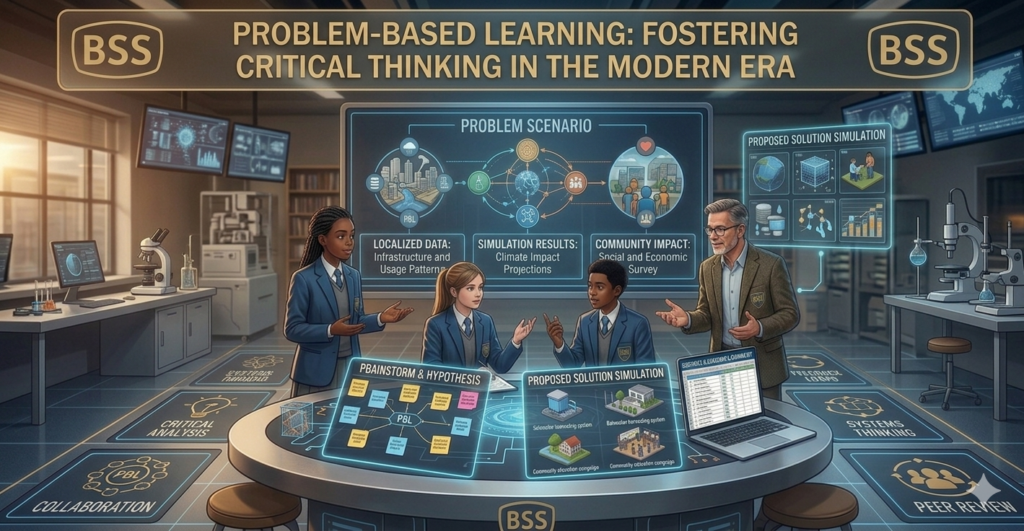
Problem-Based Learning became a key focus in our classrooms this term as students explored real-world challenges through collaborative and student-centered activities. Teachers encouraged students to think critically, conduct research, and develop creative solutions to modern global issues.
Solving Real-World Challenges Instead of memorizing facts, students worked on practical projects connected to important topics such as urban sustainability, climate change, and data privacy. Through teamwork and guided research, students analyzed problems and proposed innovative engineering and social solutions.
This modern educational approach helped students improve communication, creativity, and decision-making skills. In addition, students learned how to evaluate information, ask meaningful questions, and work effectively in groups.
Encouraging Critical Thinking and Collaboration Teachers shifted their role from traditional lecturers to learning facilitators who guided students throughout the research and problem-solving process. Furthermore, students became more independent learners and actively participated in classroom discussions and presentations.
Problem-based activities also helped students build resilience, leadership, and confidence while preparing them for university studies and future careers. The classroom environment became more interactive, engaging, and focused on deeper understanding rather than simple memorization.
To learn more about problem-based learning and modern education strategies, students explored educational resources from Edutopia: https://www.edutopia.org/
Preparing Students for the Future At British Scientific School, we believe that modern education should prepare students to solve real-world problems and become innovative thinkers. Problem-Based Learning encouraged students to connect academic knowledge with practical applications in meaningful and exciting ways.