Student Blog

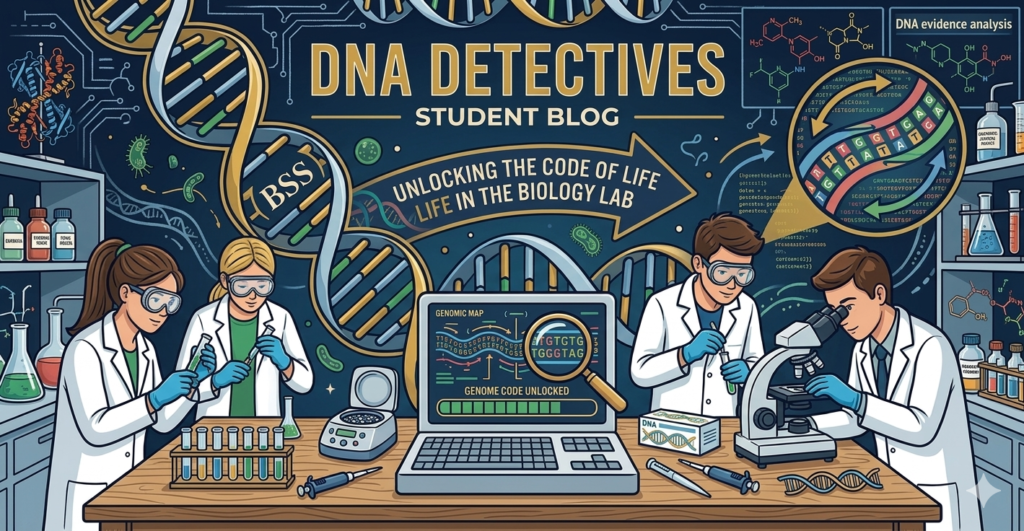
Students observing constellations through telescopes at British Scientific School

Stargazing and Cosmos: Mapping the Constellations from the School Yard

Stargazing and Cosmos: Mapping the Constellations from the School YardStargazing and Cosmos inspired students this week during our exciting school astronomy event, “Cosmos Night.” Students gathered after sunset to explore the mysteries of space using computerized telescopes, star-mapping apps, and traditional astronomy tools. Exploring the Night SkyEquipped with modern telescopes and digital star maps, students observed the lunar surface, distant planets, and bright constellations in the clear night sky. The astronomy club carefully studied famous constellations such as Orion and Ursa Major while learning how ancient civilizations used the stars for navigation and storytelling. Students were amazed by the detailed views of Saturn’s rings and Jupiter’s colorful gas bands. In addition, they practiced identifying stars and tracking planetary movement across the sky. Learning Through AstronomyThe activity encouraged curiosity, teamwork, and scientific thinking while helping students better understand astronomy and space science. Students also learned how astronomers use telescopes and technology to study distant galaxies and explore the universe. Furthermore, students used traditional astrolabes to understand how people mapped the night sky before modern technology existed. This hands-on learning experience helped connect science, history, and exploration in a creative way. To learn more about astronomy and space exploration, students explored educational resources from NASA:https://www.nasa.gov/ Inspiring Future Space ExplorersAt British Scientific School, we believe that STEM activities encourage students to ask questions and explore the world beyond the classroom. Stargazing and Cosmos helped students discover the beauty, mystery, and endless possibilities of our universe. Students can also explore more science activities and school projects through our Student Blog:https://britishscientificschool.com/student-blog/This unforgettable astronomy night reminded students that science is not only about facts and formulas, but also about curiosity, imagination, and discovery.

Stargazing and Cosmos: Mapping the Constellations from the School Yard Read More »
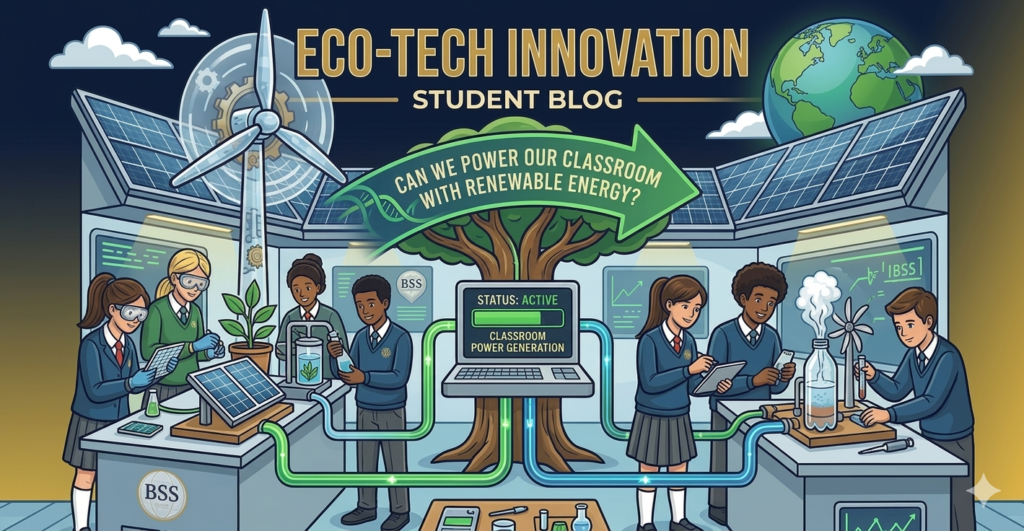
Students learning about renewable energy projects at British Scientific School

Eco-Tech Innovation: Can We Power Our Classroom with Renewable Energy?

Eco-Tech Innovation: Can We Power Our Classroom with Renewable Energy?Eco-Tech Innovation inspired our environmental science students this week as they explored creative ways to generate renewable energy using simple materials and engineering skills. Students worked together to design sustainable energy solutions and better understand how clean energy can help protect our planet. Building Renewable Energy ProjectsAs part of the “Eco-Tech Challenge,” students designed miniature renewable energy generators using recycled cardboard, portable solar tracking panels, and homemade wind turbines. Some groups even created bio-batteries using potatoes, copper coins, and zinc materials to produce electricity through chemical reactions. Through these hands-on STEM activities, students learned how renewable energy technologies can reduce pollution and support a more sustainable future. The experiments encouraged creativity, teamwork, and problem-solving while helping students connect science with real-world environmental challenges. Testing Solar Panels and Wind TurbinesStudents connected their renewable energy inventions to digital voltmeters to measure voltage and electricity generation. Teams carefully tested how sunlight, wind direction, and blade design affected the amount of clean energy produced. The classroom quickly became a hub of scientific discovery as students experimented with different engineering ideas and improved their designs after every test. Many students were surprised to see that their combined setup generated enough electricity to charge a smartphone and power a small LED desk lamp. To learn more about renewable energy and sustainability, students explored educational resources from the U.S. Department of Energy:https://www.energy.gov/ Inspiring Future Environmental InnovatorsAt British Scientific School, we believe that practical STEM learning experiences inspire students to think creatively about global challenges. Eco-Tech Innovation helped students understand that renewable energy is not only a future dream, but something they can begin building today.

Eco-Tech Innovation: Can We Power Our Classroom with Renewable Energy? Read More »

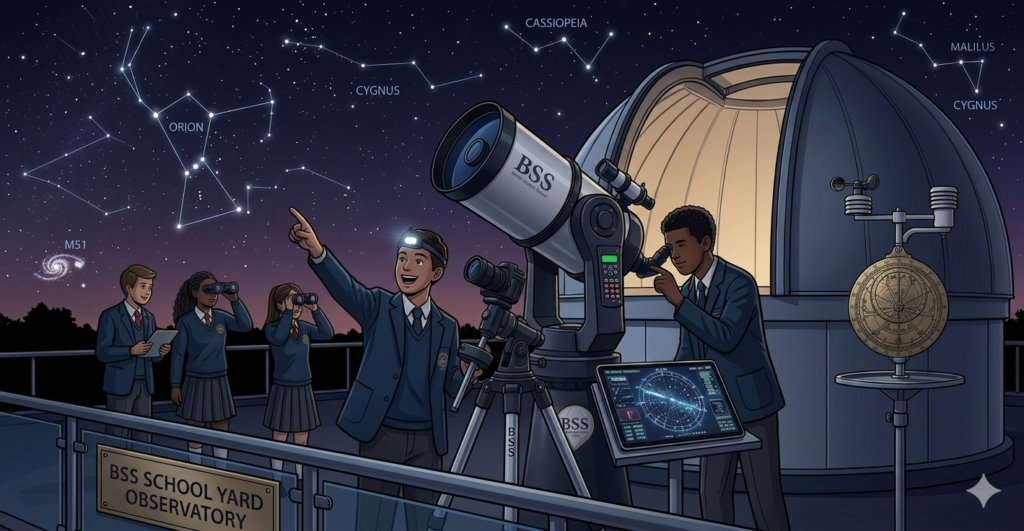
Students exploring DNA experiments in the biology lab

DNA Detectives: Unlocking the Code of Life in the Biology Lab

DNA Detectives: Unlocking the Code of Life in the Biology Lab DNA Detectives came to life this week as our biology students explored the fascinating world of genetics through exciting laboratory experiments. Students became real scientific investigators while learning how DNA stores the blueprint for every living organism on Earth. Extracting DNA in the Biology Lab Using simple household ingredients such as dish soap, rubbing alcohol, and salt, students successfully extracted visible DNA strands from fresh strawberries in our school laboratory. Watching the cloudy, fibrous DNA appear inside the test tubes was one of the most exciting moments of the activity. Through this hands-on science experiment, students discovered how DNA can be separated from cells and studied using basic laboratory techniques. They also learned how scientists use genetics in medicine, agriculture, and forensic science. Exploring Cells and Genetics Students used high-powered digital microscopes to analyze cellular structures and better understand how DNA exists inside microscopic cells. The lesson introduced students to the double-helix structure of DNA and explained how genes carry important biological information. The activity encouraged curiosity, teamwork, and critical thinking while making biology more interactive and enjoyable. Students discussed how DNA research helps scientists understand inherited traits, diseases, and the diversity of life on Earth. To learn more about genetics and DNA research, students explored educational resources from the National Human Genome Research Institute: https://www.genome.gov/ Inspiring Future Scientists At British Scientific School, we believe that practical STEM activities help students connect scientific theories with real-world applications. DNA Detectives gave students the opportunity to explore biology through discovery, experimentation, and observation. Students can also explore more science activities and school projects through our Student Blog: https://britishscientificschool.com/student-blog/ This unforgettable laboratory experience showed students that science is not only educational, but also exciting, creative, and full of discovery.

DNA Detectives: Unlocking the Code of Life in the Biology Lab Read More »

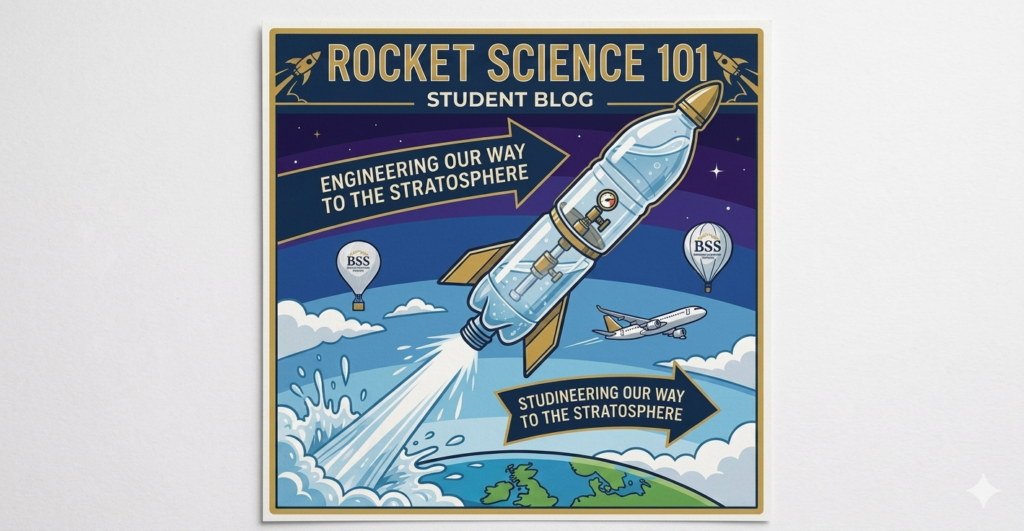
Students learning rocket science and engineering through water rocket activities

Rocket Science 101: Engineering Our Way to the Stratosphere

Rocket Science 101 came to life during our exciting after-school Science and Engineering Club activity this week. Students transformed the school football field into a real launchpad as they prepared for the annual Water Rocket Championship. Building and Testing Water RocketsArmed with plastic bottles, customized aerodynamic fins, and carefully measured ratios of water and pressurized air, students designed and launched their own water rockets. The challenge was not only to launch the rocket successfully, but also to calculate the ideal launch angle and mass to achieve maximum altitude and a safe parachute deployment. Through this hands-on STEM activity, students applied Newton’s Laws of Motion in a practical and exciting way. They learned how forces, pressure, gravity, and aerodynamics work together in real-world engineering projects.Engineering, Teamwork, and Problem Solving One of the most exciting moments of the competition came when our team’s rocket, “The Galactic Eagle,” remained airborne for an incredible 14 seconds. Students quickly realized that engineering is not only about success, but also about trial, error, creativity, and perseverance. The activity encouraged teamwork, critical thinking, and problem-solving skills while making science more interactive and engaging for all participants. Students worked together to improve rocket designs and analyze launch performance after every attempt. To learn more about rockets and space science, students explored educational resources from NASA:https://www.nasa.gov/Inspiring Future Scientists and EngineersAt British Scientific School, we believe that practical STEM experiences inspire curiosity and innovation. Rocket Science 101 helped students understand how science and engineering can turn simple materials into exciting scientific discoveries. Students can also explore more school activities and STEM projects through our Student Blog:https://britishscientificschool.com/student-blog/This unforgettable experience showed students that learning science can be both educational and incredibly fun.

Rocket Science 101: Engineering Our Way to the Stratosphere Read More »

Quantum science illustration for student learning activities

Quantum Wonders: Exploring the Physics of the Very Small

Quantum Wonders: Exploring the Physics of the Very Small:Quantum Wonders came to life this week as our Year 10 physics class explored the fascinating and mysterious world of quantum mechanics. Instead of focusing only on traditional physics, students wanted to understand how particles can behave in strange and unexpected ways at the subatomic level. Understanding Wave-Particle Duality:Through interactive computer simulations and exciting laser-splitting experiments in our school lab, students explored the concept of wave-particle duality. They learned that tiny particles such as electrons and photons can sometimes behave like waves and sometimes like particles. This surprising idea helped students realize that the universe does not always follow the rules we experience in everyday life. Quantum Entanglement and Quantum Computers:During the lesson, students also discovered the concept of quantum entanglement, where particles can remain connected even when separated by huge distances. The class discussed how scientists and technology companies are using these principles to develop powerful quantum computers that may change the future of science, medicine, and communication. To learn more about modern physics and scientific discoveries, students explored educational resources from CERN: https://home.cern/ Why Quantum Mechanics Matters:These Quantum Wonders activities encouraged students to think critically, ask questions, and explore advanced scientific ideas in a fun and engaging way. Students were amazed to discover how modern physics often feels like science fiction becoming reality. In addition, the experiments helped students improve their teamwork and problem-solving skills while making science more interactive and exciting. The lesson inspired many students to become more interested in STEM subjects and future scientific careers. Students can also explore more educational activities through our Student Blog:https://britishscientificschool.com/student-blog/ At British Scientific School, we believe that hands-on learning experiences help students better understand complex scientific concepts. Quantum Wonders showed our students that the universe is far stranger, more beautiful, and more exciting than it appears on the surface.

Quantum Wonders: Exploring the Physics of the Very Small Read More »